Quick summary
- Hel rules the Norse realm of the dead. She is a daughter of Loki and the giantess Angrboða and a sister of Fenrir and Jörmungandr.
- Snorri describes her as half blue-black and half flesh-colored, ruling the hall Éljúðnir over those who die of sickness or old age.
- She agreed to release Baldr if everything wept for him. The giantess Þökk refused, and Snorri says people believed she was Loki.
- Völuspá has Loki steer a ship of Muspell's people at Ragnarök; Snorri has Hel's people follow Loki while the giant Hrym steers Naglfar.
Hel is the ruler of the Norse realm of the dead, a daughter of Loki and the giantess Angrboða, and her body is half blue-black and half flesh-colored. According to Snorri Sturluson's Gylfaginning, Odin cast her down into Niflheim and gave her charge of everyone who dies of sickness or old age. Her name is also the name of the place she rules, and when the god Baldr is killed, his return depends on her.
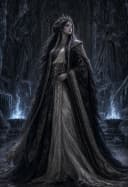
Hel
Norse pantheon
Domain: Death, the underworld, those who die of sickness or old age
Hel quick facts
| Fact | Detail |
|---|---|
| Old Norse name | Hel, from a Germanic root meaning "to hide"; the same word names her realm |
| Parents | Loki and the giantess Angrboða (Gylfaginning) |
| Siblings | The wolf Fenrir and the World Serpent Jörmungandr (Gylfaginning) |
| Realm | Hel, later called Helheim; under one of Yggdrasil's roots (Grímnismál), in Niflheim (Snorri) |
| The way there | Helvegr, the Hel-road, over the bridge Gjallarbrú, guarded by the maiden Móðguðr (Gylfaginning) |
| Hall | Éljúðnir, behind high walls and the gates called Helgrindr (Gylfaginning) |
| Household | Dish Hungr (Hunger), knife Sultr (Famine), servants Ganglati and Ganglöt, bed Kör (Sickbed), bed-curtains Blíkjanda böl (Gylfaginning) |
| Appearance | Half blue-black, half flesh-colored, with a grim, downcast look (Gylfaginning) |
| Who goes to her | Those who die of sickness or old age (Gylfaginning) |
| Most famous guest | Baldr, after his death (Baldrs draumar, Gylfaginning) |
| At Ragnarök | Her people march with Loki (Gylfaginning); she is not described fighting |
| Main sources | Snorri's Gylfaginning; the Eddic poems Völuspá, Grímnismál, Vafþrúðnismál and Baldrs draumar |
Who are Hel's parents and siblings?
Hel is one of three children Loki fathered on the giantess Angrboða in Jötunheim: the wolf Fenrir, the World Serpent Jörmungandr, and Hel herself. Snorri's Gylfaginning says the gods learned from prophecies that great harm would come from these siblings, given the nature of their mother and, worse, their father. Odin had the three brought to him and dealt with each in turn: he threw the serpent into the ocean around Midgard, he cast Hel into Niflheim with authority over nine worlds, and the gods kept the wolf at home until they bound him.
The gods did not kill the children; they contained them, and every containment holds only until the end. The Eddic poem Hyndluljóð independently confirms that Loki fathered the wolf on Angrboða, though it does not name Hel. Loki has other offspring, most famously Odin's eight-legged horse Sleipnir, whom he bore himself as a mare, but only Angrboða's three are bound up with the end of the world.
Why is Hel half dead?
Because her body shows both sides of the boundary she rules. Snorri writes that Hel is half blue-black and half the color of living flesh, so she is easy to recognize, and that she looks gloomy and fierce. The Old Norse word for her dark half, blár, means a dark blue-black rather than sky blue, which is why translations swing between "blue" and "black."
No Eddic poem describes her appearance. Whether Snorri took the detail from lost tradition or shaped it himself, no surviving source can say.
What is Helheim like?
It is dim and comfortless, but it is not a place of punishment, whatever the Christian Hell that shares its name suggests. Snorri names hunger, sickness and delay there but no torments, and Baldr even sits in a seat of honor. It is the household of those who died in bed rather than with a weapon in hand.
Snorri gives that household a grim domesticity. Hel has great estates with very high walls and huge gates. Her hall is Éljúðnir, her dish is Hunger, her knife Famine, her manservant Ganglati and her maidservant Ganglöt, both names meaning roughly "slow-walker." Her threshold is Fallanda forað, "falling peril," her bed is Sickbed and its hangings are Blíkjanda böl, "gleaming misfortune." Nearly every name means delay, want or sorrow: poverty as architecture.
A note on names: the compound Helheim, "Hel's home," is rare in the medieval texts and became the standard name through modern retellings. The Eddic poems usually say that someone goes to Hel, the place itself. Below it lies Niflhel, into which, says Vafþrúðnismál, the dead "die out of Hel."
Hel was only one of several destinations for the dead:
| Afterlife | Who goes there | Ruled by | Source |
|---|---|---|---|
| Valhalla | Half the battle-slain | Odin | Grímnismál |
| Fólkvangr | The other half of the battle-slain | Freyja | Grímnismál |
| Hel | Those who die of sickness or old age | Hel | Gylfaginning |
| Rán's hall | The drowned | Rán | Skaldic poetry; Snorri's Skáldskaparmál gives her a net for catching seafarers |
In the Greek underworld of Hades nearly everyone ends up in the same realm; the Norse sources sort the dead by how they died. For the full comparison, see Norse vs Greek Gods: Key Differences.
How do the dead reach Hel?
They travel down and north on the Hel-road. Grímnismál says that Yggdrasil has three roots, with Hel living under one, and Völuspá says that all who walk the Hel-roads tremble as the World Tree shakes before Ragnarök.
Snorri gives the fullest route, in the god Hermóðr's ride: nine nights through valleys too dark to see in, to the river Gjöll and the bridge Gjallarbrú, roofed with gleaming gold. Its guardian, the maiden Móðguðr, asks his name and family and remarks that five troops of dead men crossed the day before without making the bridge ring as loudly as he does alone. Beyond lie the gates, Helgrindr.
The poem Baldrs draumar sends Odin himself down this way on Sleipnir to wake a dead seeress. On the road he meets a dog coming from Hel with blood on its chest, often connected with Garm, the hound whose howling heralds Ragnarök.
Why did Hel keep Baldr?
Because one creature refused to weep for him. This is Hel's one major appearance in a myth. After Baldr is killed with mistletoe, his mother Frigg asks which of the gods will ride to Hel and offer a ransom for his return. Hermóðr the Bold, a son of Odin, volunteers and borrows Sleipnir.
Sleipnir leaps clean over Helgrindr, and inside the hall Hermóðr finds Baldr in the seat of honor, with his wife Nanna, who died of grief, beside him. In Baldrs draumar the dead seeress had already told Odin that mead stood brewed in Hel for Baldr.
Hel answers Hermóðr's plea with a test of whether Baldr is as loved as people say: if everything in the world, living and dead, weeps for him, he goes back to the gods; if a single thing refuses, he stays with her. Before Hermóðr leaves, Baldr sends Odin the gold ring Draupnir, and Nanna sends gifts to Frigg and her attendant Fulla.
People, animals, the earth, stones, trees and metals all weep, Snorri says, the way things drip when they come out of frost into warmth. Then the gods' messengers find a giantess named Þökk sitting in a cave. She answers with a short verse: she will weep dry tears, she had no good from Baldr living or dead, so let Hel keep what she has. Baldr stays dead, and Snorri adds that people believe Þökk was Loki.
Hel comes out of the story blameless: she set fair terms and kept them.
What does Hel do at Ragnarök?
Her people march with Loki, but no source shows Hel herself on the battlefield. The two main accounts of Ragnarök also disagree about the ships. Völuspá says that Naglfar breaks loose as the giant Hrym comes from the east, and in the next stanza a ship carrying the people of Muspell crosses the sea with Loki steering. Snorri's Gylfaginning instead makes Hrym the helmsman of Naglfar, a ship built from dead men's nails, and says that Loki arrives with "all of Hel's people" behind him.
Her kin fare badly: in Snorri, Fenrir swallows Odin, Jörmungandr and Thor kill each other, and Loki and Heimdall slay one another. Hel's own fate goes unmentioned.
Is Hel the same as Hell?
No, but the words are related. English hell comes from the same Germanic root as Old Norse hel, a word for the hidden place of the dead (compare Old English hell and Gothic halja), and Christian missionaries used that native word for the place of damnation.
The Christian Hell punishes the wicked; Snorri's Hel is bleak with hunger, sickness and delay, never fire, demons or judgment. The picture is not entirely clean, though. Near the start of Gylfaginning, Snorri says the righteous go to Gimlé while the wicked go to Hel and then down to Niflhel. Völuspá has punishment too, though not in Hel: on Náströnd, the Corpse Shore, oath-breakers and murderers wade through heavy streams while Níðhöggr sucks the corpses of the dead. Scholars debate how much of this moral sorting reflects Christian influence, and the sources cannot settle it.
In the sources
- Snorri Sturluson's Prose Edda — Gylfaginning is the main source for Hel's parentage, appearance, hall, household and the Baldr episode. Snorri was a 13th-century Icelandic Christian, writing two centuries after his country's conversion.
- Poetic Edda — poems preserved mainly in the 13th-century Codex Regius. Völuspá mentions the halls of Hel, the Hel-roads and Naglfar; Grímnismál places Hel under a root of Yggdrasil and divides the battle-slain between Odin and Freyja; Vafþrúðnismál names Niflhel; Baldrs draumar sends Odin to the gates of Hel; Hyndluljóð names Angrboða as the wolf's mother.
- Skaldic poetry — court poems older than Snorri's book, such as Ynglingatal, which he quotes, personify Hel as a female figure who takes dead kings, so she was not his invention.
Contradictions to flag:
- Where Hel lies. Grímnismál puts Hel under one of Yggdrasil's roots; Snorri sets that root over Niflheim and sends Hel herself there.
- Who goes to Hel. Snorri says Hel receives those who die of sickness or old age, but earlier says she receives the wicked. Baldr, killed by a weapon, goes there anyway.
- Ragnarök's ships. Völuspá puts Loki at the helm of a ship of Muspell's people; Snorri has Hrym steering Naglfar and Hel's people following Loki.
- Goddess or place. In many Eddic lines "Hel" could mean either the ruler or the realm, and the grammar does not decide.
In popular culture
- Marvel. Hela, played by Cate Blanchett in Thor: Ragnarok (2017), is Marvel's version of Hel: the film makes her Odin's firstborn daughter rather than Loki's, and she seizes Asgard by force. The mythological Hel never leaves her realm or attacks the gods.
- God of War (2018). Helheim appears as a frozen realm of the dead that Kratos and Atreus must enter and escape. Its gloom and the difficulty of leaving echo the sources; the details are the game's own design.
Frequently asked questions
Who is Hel in Norse mythology?
Hel is the ruler of the Norse realm of the dead, a daughter of Loki and the giantess Angrboða. Odin cast her into Niflheim and gave her charge of those who die of sickness or old age.
What does Hel look like?
Snorri's Gylfaginning says she is half blue-black and half flesh-colored, with a grim, downcast look. No Eddic poem describes her appearance.
Is Helheim the same as Hell?
No. The English word hell shares a Germanic root with Old Norse hel, but Hel is a dim, comfortless home for the dead, not a place of fiery punishment.
Who are Hel's siblings?
Her full siblings are the wolf Fenrir and the World Serpent Jörmungandr, all three children of Loki and Angrboða. Loki also gave birth to Odin's horse Sleipnir.
Why didn't Hel release Baldr?
Hel promised to let Baldr go if everything in the world wept for him. The giantess Þökk refused, and Snorri says people believed she was Loki in disguise.
Does Hel fight at Ragnarök?
No source shows Hel fighting. Snorri says Hel's people follow Loki to the battle, while Völuspá has Loki steering a ship of Muspell's people.
Keep exploring
Hel's story is inseparable from her family, a trickster father with a wolf and a serpent for sons, and from the bright god she would not release without the whole world's tears. Her underworld is one half of the Norse worldview; the other belongs to radiant, doomed Asgard. For the Greek mirror of everything the Norse did differently, read Who Was Zeus? Myths, Powers & Symbols.