Quick summary
- Shape-shifting trickster of Norse myth: son of the giant Fárbauti, Odin's blood brother, father of Fenrir, Jörmungandr and Hel, and mother of Sleipnir.
- He found the mistletoe that killed Baldur and guided blind Höðr's throw, so the gods bound him in a cave under a serpent dripping venom.
- At Ragnarök he breaks free, fights on the giants' side, and he and Heimdall kill each other.
- Völuspá has Loki steer a ship of Muspell's people; Snorri puts the giant Hrym at Naglfar's helm and has Loki lead Hel's people.
Loki is the shape-shifting trickster of Norse mythology: the son of the giant Fárbauti and Laufey, Odin's sworn blood brother, and the father of the wolf Fenrir, the World Serpent Jörmungandr and Hel, ruler of the dead. He begins as the gods' clever, unreliable helper, causing their problems and then solving them, and becomes their enemy after he arranges the death of Baldur. Bound beneath the earth, he waits for Ragnarök, where he fights on the giants' side. Almost nothing about him resembles the Marvel version except the name and the smile.
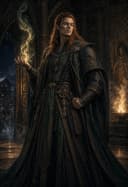
Loki
Norse pantheon
Domain: Trickery, shapeshifting, cunning, chaos
Loki quick facts
| Fact | Detail |
|---|---|
| Old Norse name | Loki; also called Loptr (Lokasenna, Hyndluljóð, Gylfaginning) |
| Parents | The giant Fárbauti and Laufey, also called Nál (Gylfaginning) |
| Brothers | Býleistr and Helblindi (Gylfaginning) |
| Wife | Sigyn |
| Children with Angrboða | Fenrir, Jörmungandr and Hel |
| Children with Sigyn | Nari or Narfi, and Váli (Snorri is inconsistent about these names) |
| Also mother of | Sleipnir, Odin's eight-legged horse (Gylfaginning, Hyndluljóð) |
| Bond with Odin | Blood brothers, sworn long ago (Lokasenna) |
| Shapes taken | Mare, salmon, fly, seal, woman, falcon (in a borrowed feather cloak) |
| Punishment | Bound in a cave under a venom-dripping serpent (Gylfaginning) |
| Fate at Ragnarök | Breaks free and dies fighting Heimdall, who dies too (Gylfaginning) |
| Main sources | Lokasenna, Þrymskviða, Völuspá, Snorri's Gylfaginning and Skáldskaparmál |
Is Loki a god or a giant?
Both: his father Fárbauti is a giant, yet Snorri's Gylfaginning counts Loki among the Æsir, describing him as handsome but evil in character and changeable in his ways.
He is not Odin's son and not Thor's brother — that framing is pure Marvel. What ties him to Asgard is an oath: in Lokasenna, Loki reminds Odin that they once mixed their blood and swore never to drink ale unless both were served, and Odin makes room for him.
What shapes did Loki take?
More than any other Norse figure. Snorri has him become a mare, a salmon, a fly and a woman; Skáldskaparmál cites a skaldic poem in which he fights Heimdall as a seal, and in Þrymskviða he flies in Freyja's feather cloak. In Lokasenna, Odin even taunts him with eight winters spent under the earth as a woman, milking cows and bearing children.
Why did the gods keep Loki around?
Because he was useful, solving problems he usually caused. In Skáldskaparmál he cut off Sif's golden hair out of mischief and replaced it with dwarf-made gold that grows like real hair. He then bet his head that the dwarf Brokkr's brother could not forge treasures as fine, and lost; Brokkr got Mjölnir for Thor and sewed Loki's lips shut.
In Gylfaginning he advised the gods to let a giant builder use his stallion to raise Asgard's wall. When the work neared completion, the gods threatened him, so he lured the stallion away as a mare — and later gave birth to Sleipnir. In Skáldskaparmál, caught by the giant Þjazi, he bought his freedom by luring the goddess Iðunn and her apples of youth out of Asgard. The gods grew grey and old until Loki, in Freyja's falcon shape, flew her home as a nut.
Every one of these "helpful" myths ends with someone diminished — Sif shorn, a builder cheated, Loki himself pregnant.
Were Loki and Thor friends?
They were companions, not brothers. In Þrymskviða, the giant Þrymr steals Thor's hammer and demands Freyja as ransom. Heimdall proposes dressing Thor as the bride, and when Thor balks, Loki tells him to be quiet or the giants will soon live in Asgard. Loki goes along as bridesmaid and explains away the bride's huge appetite and burning eyes: she has not eaten or slept for eight nights, so eager was she for the wedding. Then Thor seizes the hammer and kills the giants.
In Snorri's Útgarða-Loki episode, Loki loses an eating contest to Logi, who is wildfire itself and eats the trough as well as the meat. Near its end, Hymiskviða has one of Thor's goats lamed, and the poem blames Loki.
Read backward from Ragnarök, the comedies curdle: the same cleverness that recovered the hammer will aim Höðr's throw.
Who are Loki's children?
With the giantess Angrboða, Loki fathered the three beings that help end the world: the wolf Fenrir, the serpent Jörmungandr and Hel, ruler of the Norse dead. Gylfaginning says the gods learned from prophecy that these children would bring them harm, so Odin threw the serpent into the sea, sent Hel to rule Niflheim and had the wolf bound. All three containments fail at Ragnarök.
| Child | Other parent | Fate |
|---|---|---|
| Fenrir | Angrboða | Bound; kills Odin at Ragnarök |
| Jörmungandr | Angrboða | Cast into the sea; he and Thor kill each other |
| Hel | Angrboða | Rules the dead; her people follow Loki at Ragnarök |
| Sleipnir | Svaðilfari (Loki as mare) | Odin's eight-legged horse |
| Nari or Narfi, Váli | Sigyn | One son's entrails bind Loki |
How did Loki kill Baldur?
He did not strike the blow himself: in Snorri's Gylfaginning, Loki found the one thing that could hurt Baldur and put it in a blind god's hand. Frigg had made everything swear not to harm her son. Disguised as a woman, Loki learned from Frigg that she had skipped one young shoot, the mistletoe. He fetched it, gave it to blind Höðr and guided his aim, and Baldur, the brightest Norse god, fell dead.
Hel agreed to release Baldur if everything in the world wept for him. Everything did except a giantess named Þökk in a cave; Snorri says only that people believe she was Loki.
Why did Loki insult the gods in Lokasenna?
To shame them: at a feast in the sea giant Ægir's hall after Baldur's death, Loki answers each god's threat with a humiliating secret. He accuses the goddesses of affairs, mocks Týr for the hand Fenrir bit off, and tells Frigg he is the reason she will never again see Baldur ride home. Skaði warns that the gods will bind him on a sharp edge with the entrails of his own son; Loki answers that he led the killing of her father, Þjazi. Only Thor's hammer makes him leave.
How was Loki punished?
The gods hunted him down and bound him under the earth until Ragnarök. In Gylfaginning, Loki hid by day as a salmon in the waterfall Fránangr. He had invented the first net himself, then burned it when the gods approached. The wise god Kvasir read its pattern in the ashes, the gods wove their own, and Thor caught the leaping salmon by the tail — which, Snorri says, is why salmon taper there.
They dragged Loki to a cave and bound him across three stones with the entrails of his own son, which turned to iron. Skaði hung a venomous serpent above his face. His wife Sigyn holds a bowl to catch the venom; when she leaves to empty it, the drops strike him and his writhing shakes the earth. That, says Snorri, is what people call earthquakes. In Völuspá, the seeress sees a bound figure in Loki's likeness lying in a grove, with Sigyn sitting beside him, far from glad.
What does Loki do at Ragnarök?
He breaks free and fights against the gods. In Völuspá, the ship Naglfar is loosed and a ship carrying the people of Muspell crosses the sea with Loki at the helm. Snorri's Gylfaginning tells it differently: Naglfar, built from dead men's nails, is steered by the giant Hrym, while Loki arrives with all of Hel's people behind him. Snorri alone stages the final duel: Loki and Heimdall fight, and each kills the other. The full sequence is in Ragnarök: Every Event, In Order.
In the sources
- Poetic Edda, preserved mainly in the 13th-century Codex Regius — Lokasenna (the flyting, the blood oath, and a prose ending on the capture and binding), Þrymskviða (the stolen hammer), Völuspá (the bound Loki and his ship at Ragnarök), Baldrs draumar (Baldur's doom, with Loki loose from his bonds as the end-time signal), Hymiskviða (the lamed goat) and Hyndluljóð (Angrboða and Sleipnir).
- Snorri Sturluson's Prose Edda, written by a 13th-century Icelandic Christian — Gylfaginning (his family, the builder, Útgarða-Loki, Baldur, the binding, Ragnarök) and Skáldskaparmál (Iðunn, Sif's hair, the Brokkr wager, and Loki's poetic names, including Heimdall's enemy).
- Skaldic poems quoted in Skáldskaparmál — Haustlöng tells the Iðunn story, and Húsdrápa the seal fight with Heimdall.
- Saxo Grammaticus, Gesta Danorum — a Christian-era Danish history in which Hotherus kills Balderus with a sword, with no Loki and no mistletoe.
Contradictions to flag:
- Who is to blame for Baldur. Völuspá and Baldrs draumar name Höðr as the killer and never mention Loki's part. Snorri makes Loki the planner, and in Lokasenna Loki boasts of it.
- Loki's sons by Sigyn. Snorri first gives Loki one son with Sigyn, "Nari or Narfi"; at the binding he names two, Váli and Nari or Narfi, and has Váli turned into a wolf who tears his brother apart. The prose ending of Lokasenna swaps the roles: Loki is bound with Nari's entrails, and Narfi becomes the wolf.
- Who steers the ship. Völuspá puts Loki at the helm of a ship carrying Muspell's people, separate from Naglfar; in Snorri, Loki steers nothing — the giant Hrym steers Naglfar and Loki leads Hel's people.
- The lame goat. Hymiskviða blames Loki; in Gylfaginning, Snorri blames the farmer's son Þjálfi.
Scholars still debate whether Loki "turned evil" late in the tradition or was always an outsider, useful because he was never fully of Asgard.
In popular culture
- Marvel. Loki first appeared in Journey into Mystery #85 (1962), and Tom Hiddleston has played him since Thor (2011), including the Disney+ series Loki. Marvel kept the shapeshifting and the tricks but invented the adoption by Odin, the brother rivalry with Thor and the redemption arc.
- God of War (2018) and God of War Ragnarök (2022). The games reveal that Kratos's son Atreus is also called Loki, a name from his giant mother — a modern invention with no source behind it.
- Wagner's Das Rheingold. Loge, the cunning fire god of the Ring cycle, blends Loki with Logi, the wildfire who beat him at eating. The Eddas never make Loki a fire god.
Frequently asked questions
Who is Loki in Norse mythology?
Loki is the shape-shifting trickster of Norse mythology, son of the giant Fárbauti and Laufey and Odin's blood brother. He helps the gods, then turns against them, and fights on the giants' side at Ragnarök.
Is Loki Thor's brother?
No. In the myths Loki is Odin's blood brother and Thor's travelling companion. Marvel made him Thor's adopted brother.
Is Loki a god or a giant?
His father Fárbauti is a giant, but Snorri's Prose Edda counts Loki among the Æsir. His place in Asgard rests on the blood oath he swore with Odin.
Who are Loki's children?
With the giantess Angrboða he fathered Fenrir, Jörmungandr and Hel. With his wife Sigyn he had sons named Nari or Narfi and Váli, and as a mare he gave birth to Sleipnir.
How did Loki kill Baldur?
According to Snorri, Loki learned that mistletoe was the one thing that had not sworn to spare Baldur. He gave it to the blind god Höðr and guided his aim.
What happens to Loki at Ragnarök?
He breaks free of his bonds and joins the giants against the gods. Snorri says Loki and Heimdall kill each other in the final battle.
Keep exploring
Loki's story is the spine of Norse myth: his daughter keeps the dead in Hel: Ruler of the Norse Underworld, and his cruelest trick killed Baldur: The Norse God Whose Death Began Ragnarök. Follow either thread and you end at the same battlefield. To meet every god he crossed, see Norse Gods and Goddesses: Every Major Deity Explained.