Quick summary
- Greek god of war, its violence, bloodlust and slaughter; son of Zeus and Hera, lover of Aphrodite. Roman equivalent: Mars.
- In Homer's Iliad, Zeus calls him the most hateful of all the gods because he loves only strife and fighting.
- Often beaten: wounded by Diomedes, knocked flat by Athena with a stone, and locked in a bronze jar by two giants.
- The Areopagus is named for his own trial there (Apollodorus, Pausanias) or for the Amazons' sacrifices to him (Aeschylus).
Ares is the Greek god of war, specifically its violence, bloodlust and slaughter, and one of the twelve Olympians. He is the son of Zeus and Hera, the lover of Aphrodite and the Roman Mars. The Greeks respected his power but rarely liked him: in Homer's Iliad his own father calls him the most hateful of all the gods, and in myth after myth the war god is wounded, trapped or beaten.
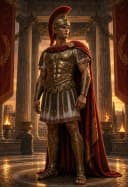
Ares
Greek pantheon
Domain: War, battle frenzy, bloodshed, courage, manly valor
Ares quick facts
| Fact | Detail |
|---|---|
| Greek name | Ares; Homer also calls him Enyalios |
| Roman equivalent | Mars |
| Parents | Zeus and Hera (Hesiod and Homer); in Ovid's Roman Fasti, Juno conceives Mars alone with the help of a magic flower |
| Siblings | Hebe and Eileithyia; Hephaestus in Homer's version |
| Lover | Aphrodite |
| Children | Phobos (Fear), Deimos (Terror) and Harmonia with Aphrodite; Ascalaphus and Ialmenus (Iliad); the Amazon queen Penthesilea; the brigand Cycnus; Diomedes of Thrace |
| Companions | Enyo, goddess of war; Eris (Strife), his sister in the Iliad |
| Symbols | Spear, bronze helmet, shield, war chariot |
| Sacred animals | Dogs, which Spartan youths sacrificed to Enyalius; for the Roman Mars, the wolf and the woodpecker |
| Homeland | Thrace, in the far north of the Greek world |
| Main cult sites | Sparta, Athens (the Areopagus hill and a temple in the Agora), Geronthrae in Laconia |
What is Ares the god of?
Ares is war at its rawest: the shouting, the killing, the charge that does not stop to think. That sets him apart from his half-sister Athena, who stands for strategy, discipline and the defense of cities. The Iliad stages this contrast again and again, and Athena wins every time.
In Iliad Book 5, wounded and complaining, Ares runs to Zeus for sympathy. He gets none. Zeus tells him that of all the gods on Olympus he hates Ares most, because strife, war and fighting are all he loves, and that he has inherited his mother Hera's stubborn temper. If Ares were anyone else's son, he would long ago have been thrown deeper than the Titans. Zeus heals him anyway.
What are Ares's powers?
On paper, he is frightening:
- Strength and speed in battle. He is a huge figure in full bronze, and when he is wounded in the Iliad his scream sounds like nine or ten thousand men shouting at once.
- Battle frenzy. He fills fighters with the blind rage that makes them charge, and spreads panic in the enemy.
- A terrifying entourage. In the Iliad he orders his sons Phobos and Deimos to yoke his horses, and Enyo and Eris go with him into battle. In Hesiod's Shield of Heracles, Fear and Terror stand beside him in his chariot.
In practice, he loses a remarkable number of fights:
| Opponent | What happened | Source |
|---|---|---|
| Diomedes, guided by Athena | Speared in the belly, Ares flees to Olympus roaring | Iliad 5 |
| Athena | She knocks him flat with a boundary stone; his fallen body covers seven plethra of ground | Iliad 21 |
| The giants Otus and Ephialtes | They lock him in a bronze jar for thirteen months; Hermes steals him out | Iliad 5 |
| Heracles | Ares attacks to avenge his son Cycnus and is wounded in the thigh | Hesiod, Shield of Heracles |
The losing war god is a Greek idea about war: blind fury loses to skill and cunning. His rescue from the jar is a classic piece of Hermes's divine burglary. For a side-by-side view of what each Olympian can do, see Greek gods and their powers.
Why did the Greeks dislike Ares?
He is an outsider. Homer places his home in Thrace, a wild northern land, and in Odyssey Book 8 it is to Thrace that he flees after being caught with Aphrodite.
He has no loyalty. In Iliad Book 5, Athena calls him a two-faced turncoat who promised her and Hera to fight for the Greeks and then joined the Trojans. In Book 21, after flattening him, she tells him this is his mother's curse for deserting the Greeks.
He brings death without glory. In Sophocles' Oedipus the King, the chorus prays for the gods to drive Ares away from Thebes, and the Ares they mean is the plague killing the city.
Ares still had worshippers. At Sparta, Pausanias saw an old statue of Enyalius in chains, kept that way so that the spirit of war would never leave the city.
Who were Ares's lovers and children?
His great love was Aphrodite, the wife of Hephaestus. In Odyssey Book 8 the smith god catches them in an invisible net and calls the gods to laugh at them. Hesiod's Theogony gives the couple three children: Phobos and Deimos, who scatter armies, and Harmonia, whose name means harmony.
Harmonia married Cadmus, the founder of Thebes, but only after Cadmus, says Apollodorus, killed a serpent guarding Ares's spring and served the god eight years as penance.
Ares's other children tend to be as violent as he is:
- Cycnus, who robbed travelers on their way to Delphi until Heracles killed him.
- Diomedes of Thrace, owner of the man-eating mares that Heracles captured in his eighth labor.
- Penthesilea, queen of the Amazons, who fought for Troy and was killed by Achilles.
- Ascalaphus, killed at Troy in Iliad Book 13. In Book 15, Ares hears the news and arms himself to avenge his son against Zeus's orders, until Athena strips off his helmet and sits him down.
Why is the Areopagus named after Ares?
The Areopagus, the hill of Ares beside the Acropolis, housed Athens's oldest court, which judged homicide. Its name has two rival origin stories.
In Apollodorus and Pausanias, Ares killed Halirrhothius, a son of Poseidon, for assaulting Ares's daughter Alcippe. Poseidon prosecuted him before the gods on that hill, and Ares was acquitted. Pausanias calls it the first trial ever held there.
In Aeschylus' Eumenides, Athena founds the court herself to try Orestes, and explains the hill's name by saying the Amazons camped there and sacrificed to Ares when they attacked Athens.
How is Ares different from Mars?
The Romans matched Ares with Mars, a far more respected god: as father of Romulus and Remus by the priestess Rhea Silvia, he was an ancestor of Rome itself. The month of March is his, Roman armies mustered on the Campus Martius, the Field of Mars, and Augustus built a grand temple to Mars Ultor, Mars the Avenger. Mars also protected fields and crops, a role Ares never had.
His weekday shows how gods were translated across cultures. The Romans called it dies Martis, still visible in French mardi. Germanic speakers swapped in their own war god, Tiw, giving English Tuesday. That god is the Norse Tyr, and the comparison says a lot: Tyr is honored for sacrificing his hand to bind a wolf, while Ares is mocked for losing fights. For more contrasts, see Norse vs Greek gods.
In the sources
- Homer, Iliad — the fullest portrait: his wounds, his defeats by Athena, Zeus's rebuke, his grief for Ascalaphus, the bronze jar.
- Homer, Odyssey — Book 8, the affair with Aphrodite and Hephaestus's net.
- Hesiod, Theogony — his parentage and his children with Aphrodite; the Shield of Heracles, attributed to Hesiod, tells the fight over Cycnus.
- Homeric Hymn to Ares — a short hymn that, oddly, asks him for the courage to avoid strife.
- Aeschylus, Eumenides; Sophocles, Oedipus the King; Apollodorus, Library; Pausanias, Description of Greece; Ovid, Fasti (Mars).
Where the sources disagree:
- His birth. Zeus and Hera are his parents in Hesiod and Homer, while Ovid has Juno conceive Mars with no father at all, mirroring Hesiod's story of Hera bearing Hephaestus alone.
- The Areopagus. Named for Ares's own trial (Apollodorus, Pausanias) or for the Amazons' sacrifices to him (Aeschylus).
- The fight with Heracles. In the Shield of Heracles, the hero wounds Ares in the thigh. Apollodorus says the duel never finished, because Zeus threw a thunderbolt between the two to separate them.
In popular culture
- God of War (2005). Ares is the main villain, and Kratos kills him to become the new god of war. No ancient myth kills Ares, but the game keeps his defeat by a cleverer opponent, with Athena on the winning side as in the Iliad.
- Wonder Woman (2017). David Thewlis plays Ares, who hides as a British politician and is said to have killed the other gods. The god-killing backstory is the film's invention.
- Percy Jackson and the Olympians. Rick Riordan makes Ares a leather-jacketed biker and an early antagonist in The Lightning Thief. Ray Winstone played him in the 2010 film and Adam Copeland in the 2023 Disney+ series. His bullying daughter Clarisse is Riordan's creation.
- Hades (Supergiant Games, 2020). Ares gives boons built around delayed, brutal damage, a fair game translation of a god who is all destruction and no defense.
Frequently asked questions
Who was Ares in Greek mythology?
Ares was the Greek god of war and bloodlust, one of the twelve Olympians and the son of Zeus and Hera. The Romans identified him with Mars.
Why did Zeus hate Ares?
In Homer's Iliad, Zeus tells Ares he is the most hateful of the gods because he loves nothing but strife and fighting. Zeus still heals his wounds.
Who are Ares's children?
With Aphrodite he fathered Phobos, Deimos and Harmonia. His other children include the Amazon queen Penthesilea, Ascalaphus, Cycnus and Diomedes of Thrace.
What is the difference between Ares and Athena?
Both are war gods, but Ares stands for violence and frenzy while Athena stands for strategy and the defense of cities. In the Iliad, Athena beats Ares every time they clash.
Who was Ares's wife?
Ares had no wife in the main myths. His lover was Aphrodite, who was married to Hephaestus.
Did Ares ever lose a battle?
Many times. Diomedes wounded him, Athena knocked him down, two giants trapped him in a bronze jar, and Heracles wounded him.
What is Ares's Roman name?
The Romans called him Mars, a far more honored god who fathered Romulus and Remus.
Keep exploring
Meet his lover in Aphrodite in Greek mythology, the god who rescued him in Hermes, and the rival who always beat him in Athena. Compare all twelve Olympians in Greek gods and their powers, check his family on the Greek gods family tree, or test yourself with the Greek mythology quiz.