Start with Jason and the Argonauts (1963) for a quest, Clash of the Titans (1981) for Perseus and interfering gods, or Troy (2004) for a human-centred Trojan War drama. These three Greek mythology movies offer different ways into the stories. All adapt their material, so a memorable screen detail should not automatically be treated as an ancient source.
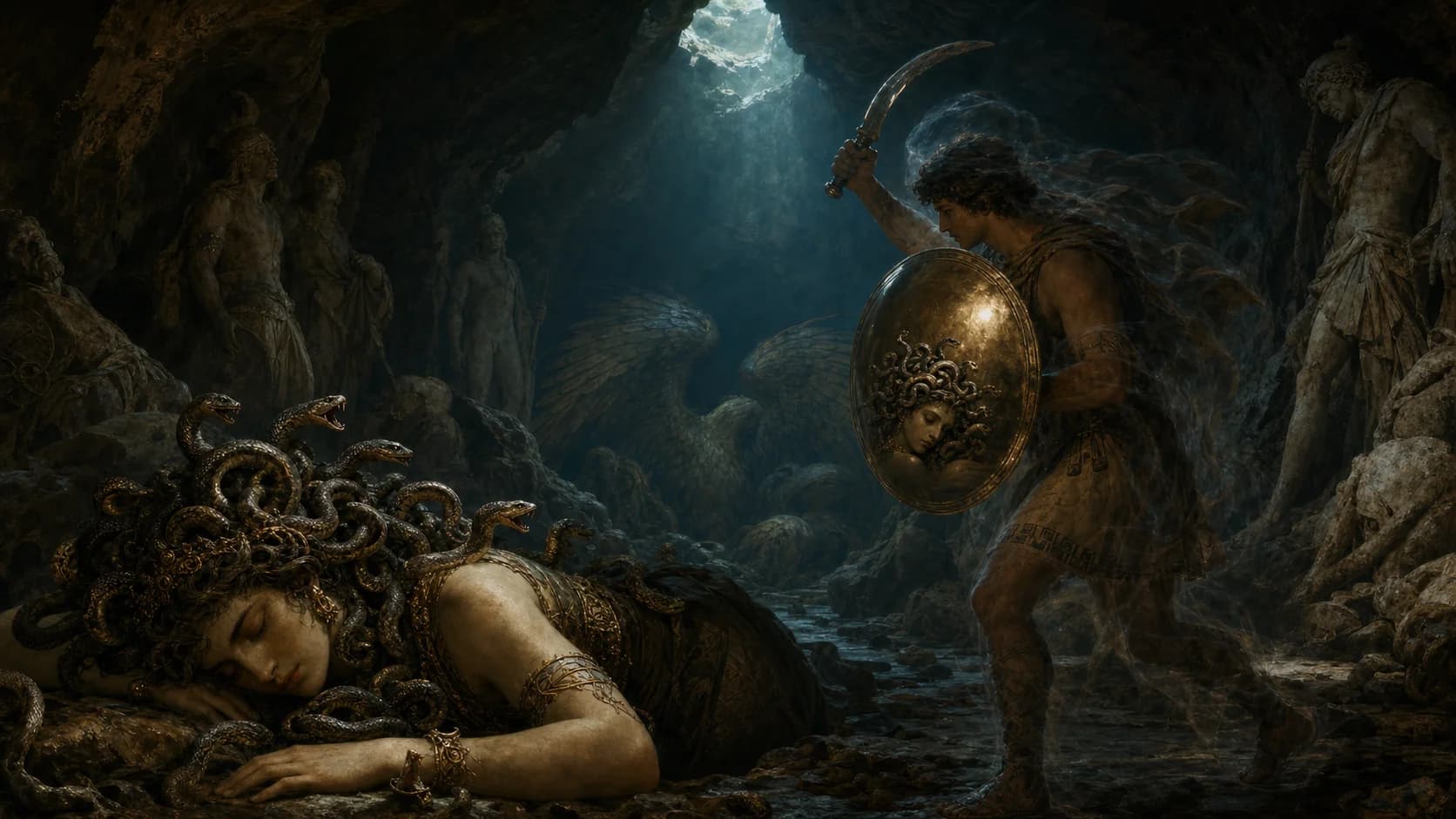
Choose your kind of evening
If you want an adventure with a clear goal, choose Jason’s voyage. If the gods themselves are what interest you, choose Clash of the Titans. If you want the conflict around Achilles and Hector, choose Troy, then keep the difference between the film and Homer’s Iliad in mind. “Greek mythology movie” covers more than one tone and more than one relationship to ancient literature.
This is a deliberately small starting selection, not a claim to include every Greek-inspired film or rank them by public ratings. Film credits and release years are linked to British Film Institute records. The recommendations below explain the kind of story each offers and the main distinction to carry into your next reading.
| Title | Best for | Year |
|---|---|---|
| Jason and the Argonauts | A monster-filled quest | 1963 |
| Clash of the Titans | Perseus, monsters and interfering gods | 1981 |
| Troy | The Trojan War as human drama | 2004 |
Jason and the Argonauts
Directed by Don Chaffey · 1963
Our adventure starting point: follow Jason’s quest for the Golden Fleece, with divine assistance and obstacles along the way. It gives a useful first sense of how a hero’s success can depend on much more than physical strength.
Best for: A monster-filled quest.
Keep in mind: A selective screen adaptation, not a complete account of the Argonaut tradition.
Film credits at BFIClash of the Titans
Directed by Desmond Davis · 1981
Choose this for a fantasy treatment of Perseus and Andromeda. Watch how the gods’ decisions affect mortal lives, then compare the film’s arrangement of creatures and events with a source-based account.
Best for: Perseus, monsters and interfering gods.
Keep in mind: The film combines and changes myths. Familiar screen details do not automatically belong to ancient versions.
Film credits at BFITroy
Directed by Wolfgang Petersen · 2004
Choose this if you are interested in the conflict around Achilles, Hector and Troy. Its human-centred approach makes it a useful contrast with Homer’s poem, where divine intervention is part of the action.
Best for: The Trojan War as human drama.
Keep in mind: A loose adaptation of Trojan legend. It is neither a faithful rendering of the Iliad nor evidence for historical events.
Film credits at BFIBibliographic and film credits checked 2026-09-16. Years identify the film, modern publication or named translation; later formats can have different dates.
Jason and the Argonauts: follow the quest
Jason and the Argonauts is our choice when you want a voyage with a recognisable objective: the Golden Fleece. A quest gives a first-time viewer a useful structure. You can follow the goal, the obstacles and the help the heroes receive without needing an encyclopaedic knowledge of Greek genealogy before the opening scene.
Watch the relationship between human action and divine assistance. A hero may be resourceful or courageous, but the world of myth does not operate as a simple competition in which strength guarantees success. Promises, favours and outside intervention can change the circumstances. That is a useful pattern to recognise when you move from a film to a source-based account.
The film is also a starting point for questions beyond its own story. Who takes part in the voyage in another telling? Which events receive more attention? What happens after the part selected for the screen? An adaptation’s ending marks the end of that film, not necessarily the end of the wider tradition associated with its characters.
For another film from this selection after Jason, try the 1981 Clash of the Titans. Both provide a route into heroic adventure, but they centre different protagonists and arrange their mythological material differently. Compare the role of divine intervention rather than assuming that the presence of monsters makes their stories interchangeable.
Clash of the Titans: watch the gods as well as the hero
Choose the 1981 Clash of the Titans for a fantasy treatment of Perseus and Andromeda. The gods’ actions help drive mortal events, so it is a useful film for viewers interested in the relationship between Olympus and the human world. Keep track of who is making a decision and who has to live with the result.
The year matters because the title also names a later adaptation. This guide’s credited director, Desmond Davis, and its linked film record refer specifically to the 1981 film. A search result that displays the title alone may refer to a different production. Check the year before choosing what to watch or saving a reference.
Do not turn the screen version into a checklist of what every ancient account must contain. Films can combine creatures, change relationships and reorganise the sequence of events. If you want to investigate a detail, identify a particular literary account and compare it directly. “Greek mythology says” is too broad a label to resolve every difference.
Our guide to Zeus gives an introduction to the ruler of Olympus alongside the film. The Greek family tree helps orient relationships, while the primary-source reading room offers a route toward ancient texts. Use those as companions rather than expecting one film to introduce every Olympian.
If you enjoyed the heroic quest here, Jason and the Argonauts is the next film from this shortlist to try. Watching them together also makes it easier to see how an adaptation creates its own coherent world from material that exists in multiple forms outside the cinema.
Troy: separate the war story from Homer’s poem
Troy is our choice for viewers who want human conflict around the Trojan War. Its treatment provides a contrast with the Iliad, where gods intervene in the action. The difference is useful: a film can take inspiration from a mythological tradition while changing how that world explains events.
The Iliad is not a complete account of the war from beginning to end. It concentrates on a particular stretch of the conflict, shaped by the opening quarrel and its consequences. A film that supplies a broader narrative is therefore drawing on a different scope. You cannot use the film’s whole plot as a summary of the poem.
After watching, distinguish three questions. What happened in the film? What does Homer’s Iliad narrate? What belongs to the wider Trojan tradition? They overlap, but they are not the same question. Keeping them separate avoids searching the Iliad for every event that a modern war narrative chooses to include.
If the film made you curious about Achilles or Hector, a translation of the Iliad is a useful next step. If you want a modern narrative approach to the wider Trojan story first, our Greek mythology book guide includes Stephen Fry’s Troy and explains how that reading differs from Homer.
The Trojan legend should also be kept separate from historical evidence. A film’s convincing costumes, landscapes or battle scenes do not establish that its events happened as shown. Enjoy its dramatic choices, then use appropriate historical research if archaeology or the history of the region becomes your main interest.
What counts as a Greek mythology movie?
For this guide, the useful connection is a film drawing on Greek gods, heroes or legendary narratives. An ancient setting alone does not establish that connection. A story about a historical conflict can take place in Greece without being an adaptation of a myth. This matters when recommendation lists mix together mythology, history and general fantasy.
The shortlist includes both overtly mythological adventure and a human-centred adaptation of Trojan legend. They are grouped because they provide routes into Greek stories, not because they reproduce the same ancient worldview. The caveats attached to the entries are part of the recommendation: they tell you what kind of experience you are choosing.
A modern adaptation may also use a familiar name in a newly invented setting. That can be an engaging fictional work without becoming evidence for what an ancient author wrote. When your question is about an ancient account, follow the trail back to a text instead of relying on the recognition of a character’s name.
A simple way to watch with the myths in mind
You do not need to pause constantly or read a commentary before every scene. Choose one thing to notice: the hero’s goal, the gods’ involvement or the explanation offered for a setback. At the end, write down one question that the film left you with. That question gives you a manageable route into further reading.
Next, consult a focused article or a passage from a source. Compare one detail rather than trying to assess the whole adaptation at once. Did the film change a relationship? Did it combine events? Did it give a character a different motive? A precise comparison is more useful than calling an entire film “accurate” or “inaccurate” without saying why.
Remember that films have their own practical and dramatic needs. They select a running time, a central cast and a sequence that an audience can follow. Ancient poetry and other literary forms have different structures. Identifying a change can help you understand both works, rather than treating every omission as a failed attempt to include everything.
Are these films suitable for children?
This guide does not assign age recommendations. A mythological adventure can contain violence, frightening creatures or adult themes, and “classic” is not an age classification. Check the official rating and content advice for the version available in your country before deciding whether it suits your household.
Different edits or releases can also differ in running time or content. The year and director in our list identify the film, but they do not replace checking the particular version you are considering. That is especially useful when a retail page offers several editions under nearly identical titles.
Where can you watch them?
Use the linked BFI records to confirm the film’s identity and credits, then check the legitimate services available where you live. We do not label a film as currently included on a particular streaming platform. Availability changes by region and date, and a listing can refer to rental or purchase rather than a subscription catalogue.
Search with the title and year together. For Clash of the Titans, that helps distinguish the 1981 production from the later one. For any film, also check the version if the service offers more than one edit. These small checks make it easier to find the work discussed here.
Continue from screen to page
For a broad introduction to the gods, explore our Greek collection. For a modern book or a Homer translation, use the Greek reading path. For free English editions of ancient texts, visit primary sources. You can follow one character or question from a film instead of trying to learn the entire tradition at once.
If you want to compare another world of stories, begin with the Norse mythology book guide or Norse vs Greek gods. The most useful next step is the one that answers the question your chosen film made you want to ask.