Quick summary
- Aphrodite is the Greek goddess of love, beauty and desire; Eros is the god of desire itself. Roman equivalents: Venus and Cupid.
- In Hesiod's Theogony, Eros is one of the first beings in the universe, older than Aphrodite; later poets make him her son.
- Love had a whole retinue: Himeros (desire), Pothos (longing), Anteros (love returned) and Peitho (persuasion).
The Greek goddess of love is Aphrodite, one of the twelve Olympians, who rules love, beauty and desire. The Greek god of love is Eros, desire itself, whom the Romans called Cupid or Amor. Around them the Greeks placed a whole family of love's powers, from longing to persuasion, while Hera looked after the institution love was supposed to lead to: marriage.

Eros
God of desire; a primordial power in Hesiod, Aphrodite's son in later poets.
Himeros
Desire, who attends Aphrodite from the moment of her birth.
Pothos
Longing, often shown in art with Eros and Himeros.
Anteros
Love returned, the answer to Eros, with an altar in Athens.
Peitho
Persuasion, Aphrodite's companion in seduction and in speech.
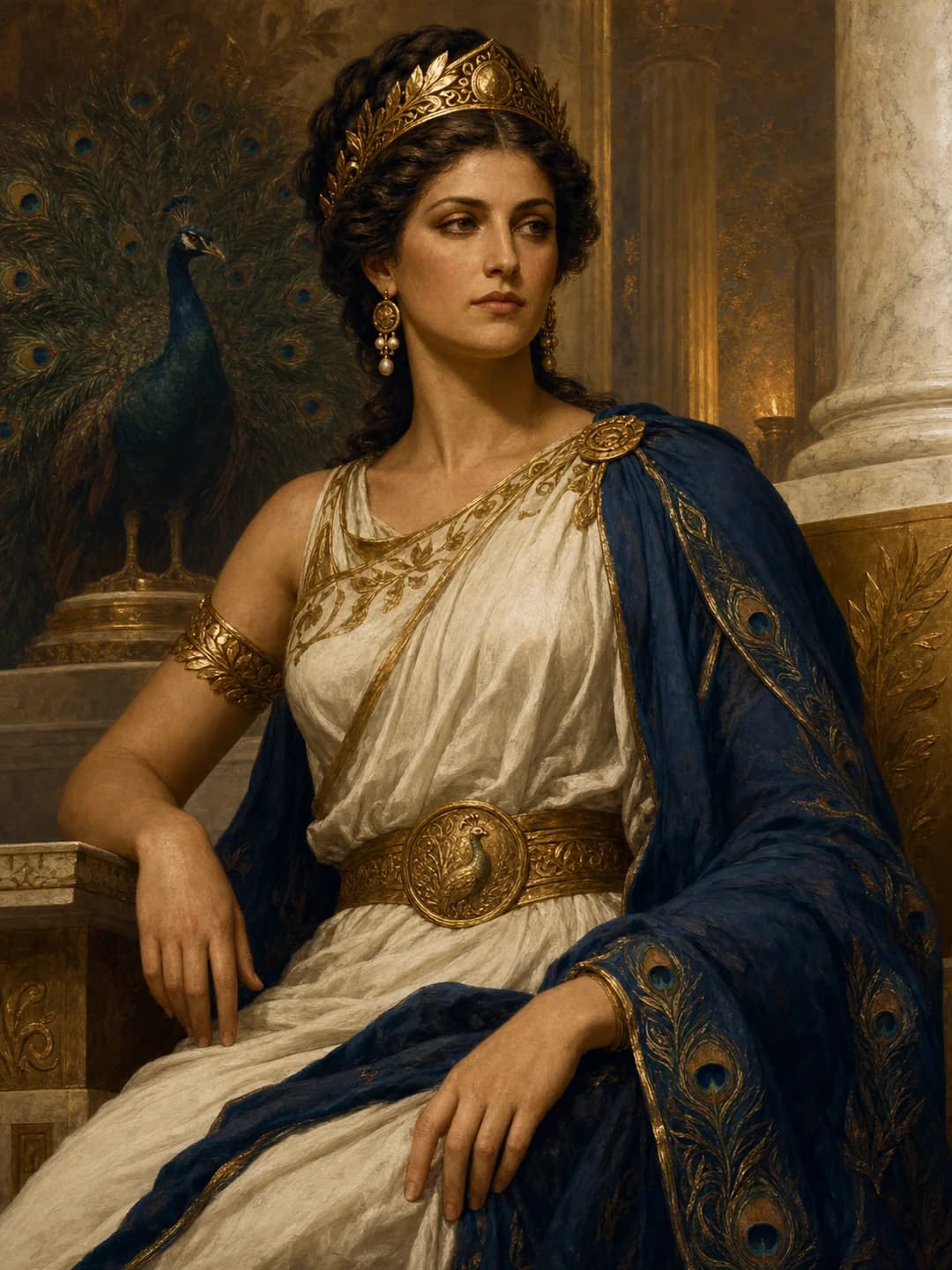
Who is the Greek god of love?
It depends on what kind of love you mean. Aphrodite is the great goddess of love and sexual desire, worshipped across the Greek world and especially on Cyprus and Cythera. Eros is the force of desire, the god who makes people fall in love. In art he starts as a handsome youth and only later becomes the winged child with a bow who is familiar today.
Is Eros older than Aphrodite?
In the oldest account, yes. Hesiod's Theogony lists Eros among the very first beings, after Chaos, Gaia and Tartarus: the fairest of the immortal gods, who loosens the limbs of gods and humans alike. When Aphrodite is born from the foam around the severed parts of Uranus, Eros and Himeros are already there to escort her. Later poets reverse the order and make Eros Aphrodite's son, and that is the version most people know.
How was Aphrodite born?
The sources give two answers. In Hesiod, Cronus castrates his father Uranus and throws the pieces into the sea, and Aphrodite rises from the white foam that gathers around them, coming ashore first near Cythera and then on Cyprus. In Homer's Iliad, she is simply the daughter of Zeus and the goddess Dione. Plato's Symposium turns the contradiction into philosophy, with one speaker claiming there are two Aphrodites: a heavenly one, born of Uranus alone, and a common one, the daughter of Zeus and Dione.
Who were the Erotes?
The Erotes are the winged gods of love in the plural. Himeros is desire and Pothos longing. Pausanias saw statues of Eros, Himeros and Pothos by the sculptor Scopas in Aphrodite's temple at Megara. Anteros is love returned, and Pausanias also records an altar of Anteros in Athens. Peitho, Persuasion, is not one of the Erotes but works beside them: in Hesiod's Works and Days, she helps adorn Pandora with golden necklaces.
Who is the goddess of marriage?
Hera. As Zeus's wife and queen of the gods, she protected marriage and married women, which is part of why her myths are so full of anger at Zeus's affairs. Weddings also had their own god, Hymenaios, the personified wedding song.
What about Cupid and Psyche?
The love story of Cupid and Psyche comes from Apuleius, a Latin writer of the second century AD, in his novel the Metamorphoses, also called The Golden Ass. Psyche, a mortal whose beauty rivals Venus's, wins Cupid, loses him by looking at him in the dark and earns him back through a series of impossible tasks set by his mother. It is a Roman tale with Greek characters, not an early Greek myth. The Roman names of all these gods are in Greek vs Roman gods.
In the sources
- Hesiod, Theogony — Eros as a first power, the birth of Aphrodite from the sea.
- Homer, Iliad and Odyssey — Aphrodite as daughter of Zeus and Dione, and her affair with Ares in Odyssey Book 8.
- Sappho, Fragment 1 — the hymn in which the poet calls Aphrodite down to help her in love.
- Plato, Symposium; Pausanias, Description of Greece; Apuleius, Metamorphoses.
Frequently asked questions
Who is the Greek god of love?
Eros is the Greek god of love and desire, and Aphrodite is the goddess of love and beauty. The Romans called them Cupid and Venus.
Is Eros the son of Aphrodite?
In later poets, yes. In Hesiod's Theogony he is much older, one of the first beings, who escorts Aphrodite at her birth.
Who is the Greek goddess of love and beauty?
Aphrodite, one of the twelve Olympians, born from the sea foam in Hesiod and the daughter of Zeus and Dione in Homer.
Who is the Greek goddess of marriage?
Hera, queen of the gods and wife of Zeus, protected marriage and married women.
What is the Roman name of Eros?
Cupid, also called Amor. The story of Cupid and Psyche comes from the Roman writer Apuleius.
Who were Aphrodite's companions?
The Erotes (Eros, Himeros, Pothos and Anteros), Peitho (Persuasion) and the Graces, who bathe and dress her in the Odyssey.
Keep exploring
Read the full story of Aphrodite and her lover Ares, see the Twelve together in The Olympian gods, or find your own match in the which Greek god are you quiz.