Quick summary
- Thanatos is the Greek god of death: the son of Night and twin brother of Hypnos (Sleep), in Hesiod's Theogony.
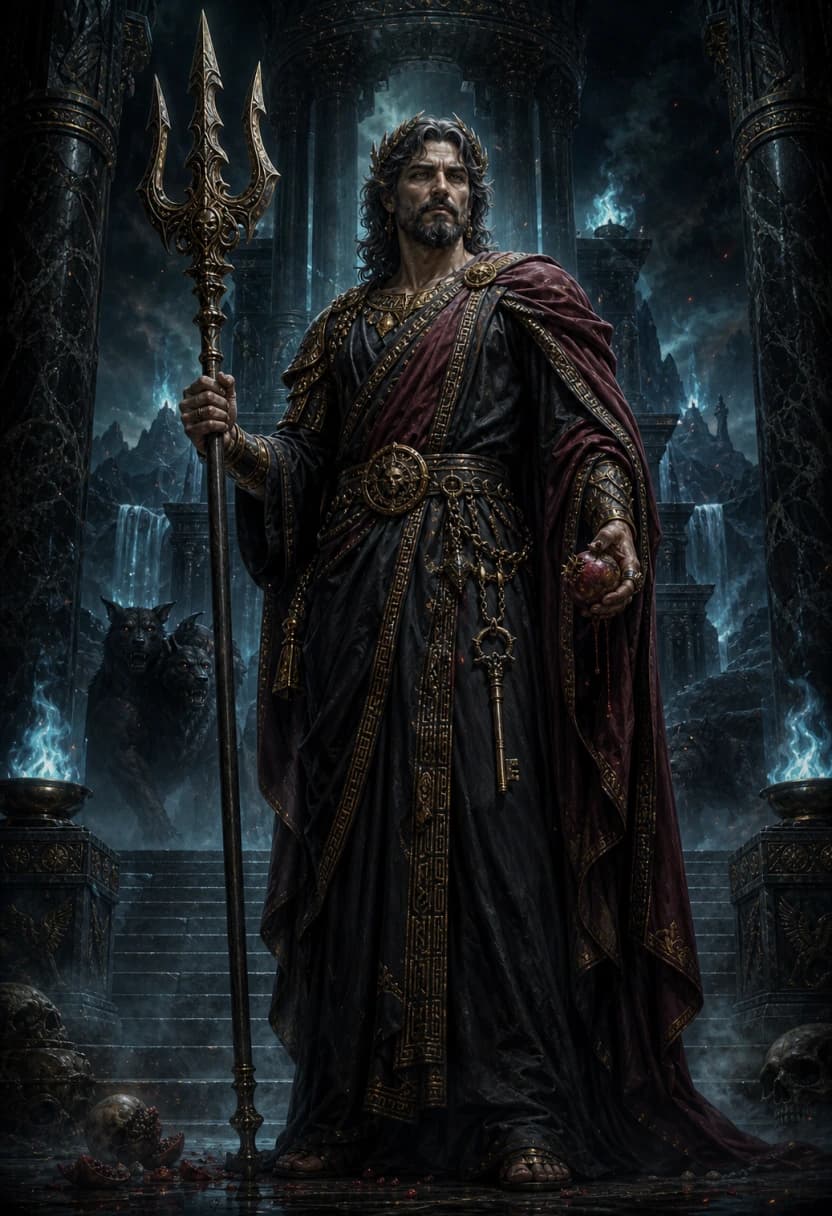
- Hades is not death itself but the king of the dead, who rules the underworld with his queen Persephone.
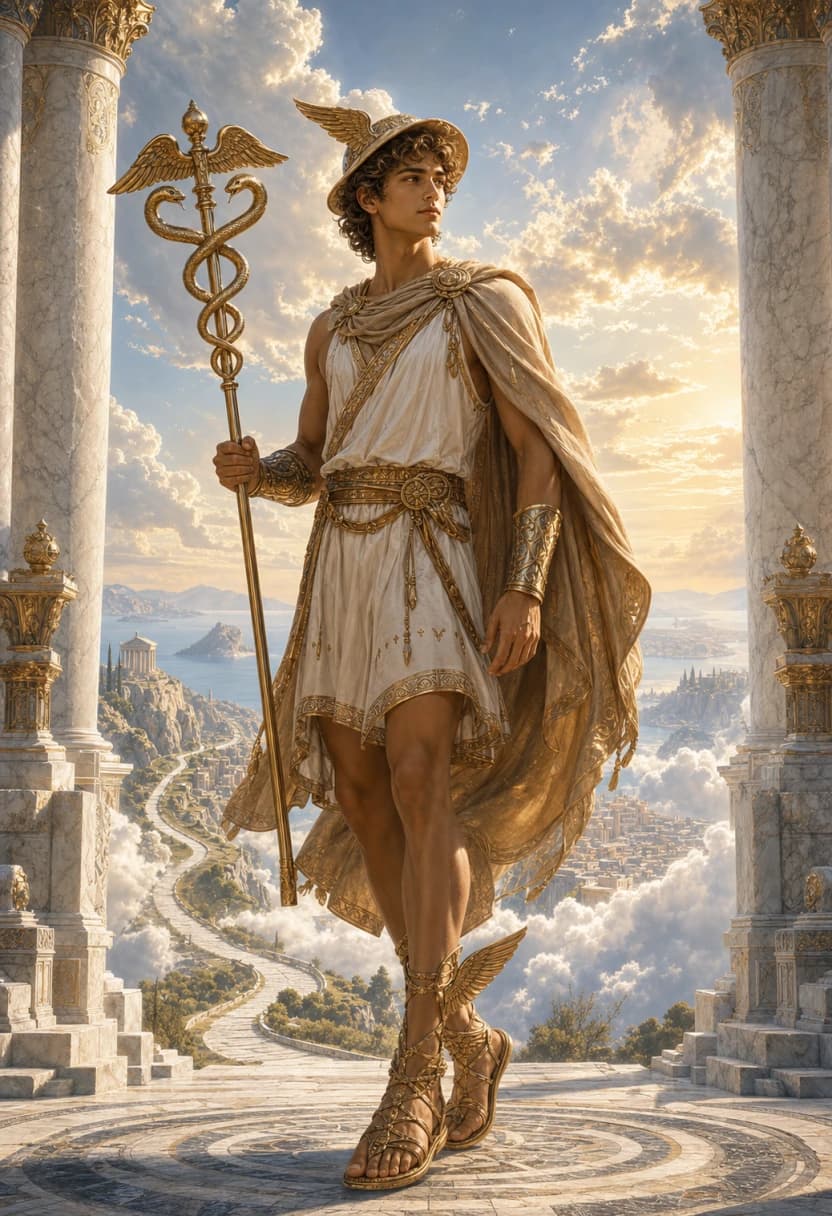
- Hermes guides souls down, Charon ferries them across, Cerberus guards the gate and the Fates decide when a life ends.
The Greek god of death is Thanatos, death itself, the son of Nyx (Night) and twin brother of Hypnos (Sleep). He is often confused with Hades, but Hades is something else: the king of the dead, who rules the underworld with his queen Persephone. Between a life's end and the throne of Hades stand a whole set of figures, each with one job.
Thanatos
Death itself, son of Night, with a heart of iron in Hesiod.
The Keres
Spirits of violent death who haunt the battlefield.
Atropos
The Fate who cuts the thread of life.
Who is the Greek god of death?
Thanatos. Hesiod's Theogony names him among the children of Night, with his twin Hypnos, and says the two live in the darkness at the edge of the world, never touched by the sun. Hypnos is gentle to humans, but Thanatos has a heart of iron and keeps whoever he catches. He rarely appears in myth as a character, which is one reason Hades took over his role in popular imagination.
Is Hades the god of death?
Not exactly. Hades does not kill anyone or fetch souls. He receives them. When Zeus, Poseidon and Hades divided the world by lot, as Poseidon tells it in Homer's Iliad, Hades won the realm of the dead, and his name came to mean the place as well as the god. The Romans called him Pluto or Dis Pater. Death itself, the Roman Mors, was a different figure.
Did anyone ever beat Thanatos?
Heracles did. In Euripides' play Alcestis, Queen Alcestis agrees to die in place of her husband Admetus. Heracles, a guest in the house, goes to her tomb, wrestles Thanatos and brings her back alive. In the Iliad, Thanatos plays a gentler part: when Zeus's son Sarpedon falls at Troy, Sleep and Death carry his body home to Lycia for burial.
How did the dead get to the underworld?
Step by step, each with its own guardian. Hermes, as guide of souls, leads the dead down: in Odyssey Book 24 he drives the souls of Penelope's suitors before him like bats, squeaking. Charon ferries them across the river, and Greeks placed a coin with the dead to pay him. Cerberus lets every soul in and none out. Below everything lies Tartarus, the pit where the Titans are imprisoned.
Who decides when someone dies?
The Moirai, or Fates: Clotho spins the thread of life, Lachesis measures it and Atropos, "the one who cannot be turned", cuts it. Hesiod gives them two different parentages in the same poem: first daughters of Night, later daughters of Zeus and Themis. The Keres, also children of Night, are the spirits of violent death. In the Shield of Heracles they fight over the fallen on the battlefield.
In the sources
- Hesiod, Theogony — Thanatos, Hypnos, the Keres and the Fates among the children of Night.
- Homer, Iliad — the division of the world, Sleep and Death carrying Sarpedon.
- Homer, Odyssey — Hermes leading the suitors' souls, and Odysseus's visit to the dead in Book 11.
- Euripides, Alcestis — Heracles wrestling Death.
- Hesiod, Shield of Heracles — the Keres on the battlefield.
Frequently asked questions
Who is the Greek god of death?
Thanatos, the personification of death, son of Nyx (Night) and twin brother of Hypnos (Sleep).
Is Hades the god of death?
No. Hades is the king of the dead and ruler of the underworld. Death itself is Thanatos.
Who is the Greek goddess of death?
There is no single death goddess. Persephone rules the dead as queen of the underworld, and the Keres are female spirits of violent death.
Who is Thanatos's brother?
Hypnos, the god of sleep. Hesiod makes them twins, both children of Night.
Who defeated Thanatos?
Heracles, who wrestled him at the tomb of Alcestis and brought her back to life, in Euripides' play Alcestis.
What is the Roman god of death?
Mors is death personified. The ruler of the dead, Hades, was called Pluto or Dis Pater.
Keep exploring
Go deeper with Hades and Persephone, cross the river with Charon, or meet the hero who beat Death in Heracles.